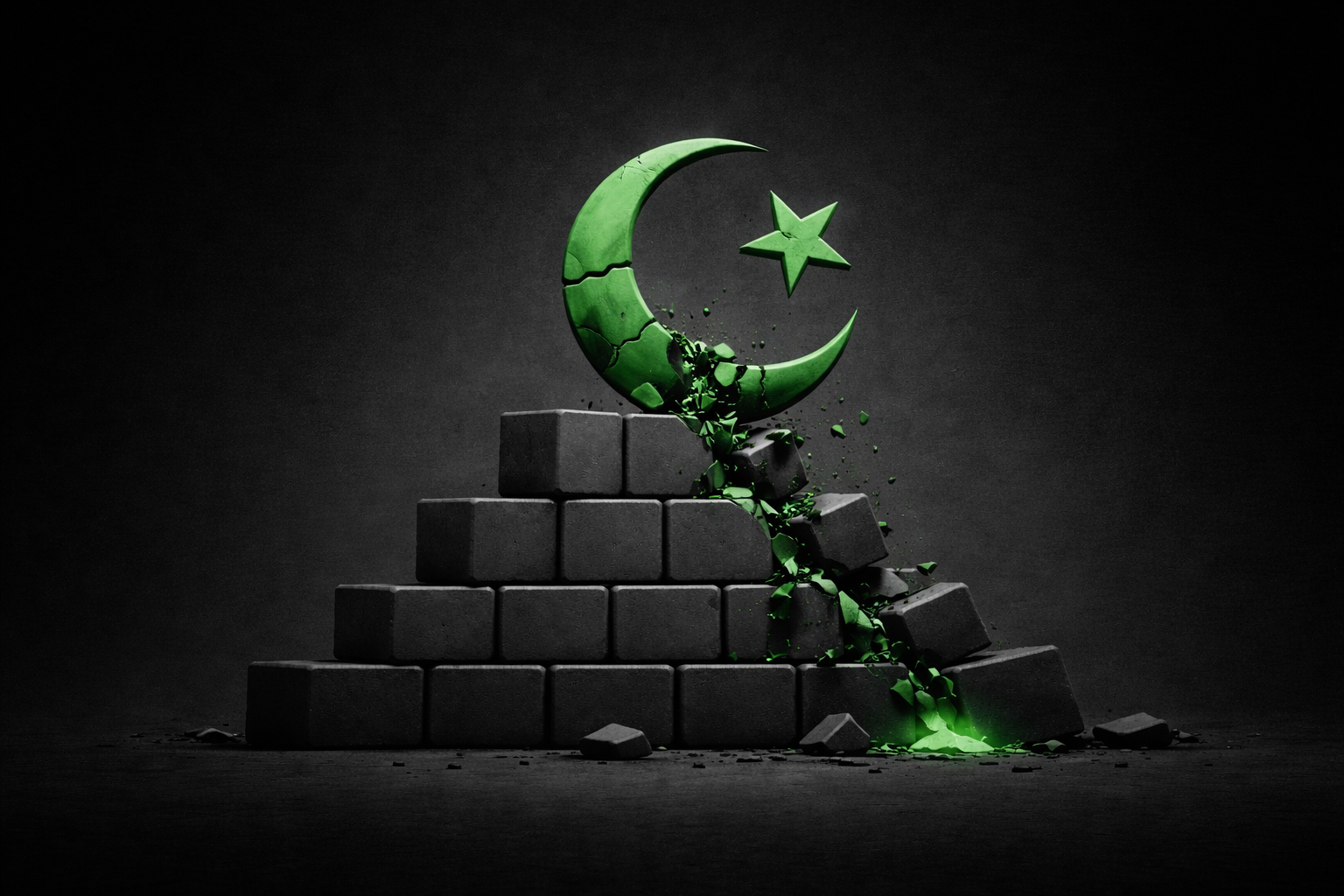
Islamism and human rights are fundamentally incompatible. Islamism remains a seductive theoretical model for achieving absolute moral and social harmony. On paper, the establishment of a society governed by divine law, where corruption is eradicated, and all citizens are united under God, appears to be the ultimate moral evolution. However, the moment you apply its actual legal framework, Sharia, the system reveals itself to be violently incompatible with modern human existence. The moment you factor in fundamental human rights, the entire structural concept collapses under the weight of its own draconian mandates.
The Legal Conflict: Sharia and the Systematic Violation of Human Rights
The core of the issue lies in Sharia Law, which Islamism seeks to impose as the supreme, unchangeable legal framework. While the promise of divine justice sounds equitable in a vacuum, Sharia systematically violates human rights at every conceivable level. It codifies inequality, stripping away the foundational concept of universal human dignity. Under Sharia, women are legally subjugated to men; their testimony is worth half that of a male, they inherit half the share of their male counterparts, and their bodily autonomy is severely restricted.
Furthermore, non-Muslims are officially relegated to second-class dhimmi status, forced to pay the jizya tax and denied equal legal standing or the right to practice their faith freely. LGBT individuals are not merely marginalized; their very existence is criminalized, often punishable by death. This is not a distortion of the ideology; it is the explicit, institutionalized reality of Sharia.
Why Theocratic Rule Inevitably Crushes Freedom
Islamism relies on the arrogant assumption that human conscience is subservient to state-enforced religious dogma. Consequently, the system strips away individual agency, obliterating the most fundamental human rights: freedom of speech, freedom of religion, and freedom of conscience. Apostasy and blasphemy are not just social taboos; they are capital crimes. By making the expression of doubt or the decision to leave the faith punishable by death, Islamism creates a society built on terror and forced compliance rather than genuine belief.
“A system that believes in a guaranteed afterlife has zero incentive to be careful with human life.“ Why would a theocracy hesitate to execute an innocent? To the true believer, death is merely a transit system, a clerical error that God will eventually sort out. Collateral damage is not a tragedy; it is just sending a soul to the VIP lounge early. This is why Islamists send their own children to the frontlines of war and terrorism. In their framework, they are not sacrificing their children. They are expediting their salvation.
As with all authoritarian systems, the absolute power required to enforce these religious mandates acts as a magnet for individuals with high levels of ambition and “dark” personality traits. These “new elites”, the clerics and morality police, exploit the collective for absolute control. They use the cloak of divine mandate to commit unspeakable human rights abuses, replacing the promise of a pure spiritual utopia with a rigid, inescapable theocratic dictatorship where state violence is sanctified.
The Inevitable Structural Failure
Islamism fails because it treats humans as subjects to a rigid, unchangeable medieval legal code, rather than autonomous individuals endowed with inherent rights. Any honest examination of Islamism and human rights leads to the same conclusion: they are mutually exclusive. Identifying these horrific human rights violations isn’t merely a reason for despair; it is an urgent moral imperative. It is a prompt to build and fiercely defend systems that protect individual liberty, using secularism, democratic rights, and equality before the law to drive human flourishing, rather than pretending Sharia’s brutal realities don’t exist. Without recognizing and protecting the inherent dignity of the individual, any attempt at an Islamist utopia will inevitably degenerate into a human rights nightmare.
The Cairo Declaration: Human Rights in Islam
In 1990, the Organization of Islamic Cooperation published the Cairo Declaration on Human Rights in Islam. It was their official alternative to the Universal Declaration of Human Rights. The document sounded progressive until you reached the fine print. Article 24 stated that all rights and freedoms were subject to Islamic Sharia. Article 25 confirmed that Sharia was the sole source for interpreting the document. Translated into plain English: you have rights, except when Sharia says you do not.
But here is where the mask slips. In 2021, the OIC quietly revised the Cairo Declaration. They removed the explicit Sharia supremacy clauses. They scrubbed Articles 24 and 25. Why? Because even they knew it was indefensible. You cannot present a human rights document to the international community that openly admits human rights rank below ancient scripture. The deletion is the confession. When your own human rights charter needs a rewrite to stop looking like a barbaric manifesto, your whole ideology is the problem.
But erasing the text does not erase the reality. The Islamic states that signed this declaration still execute apostates, still subjugate women, and still criminalize blasphemy. They did not change their laws. They just changed their PR.

Leave a Reply